
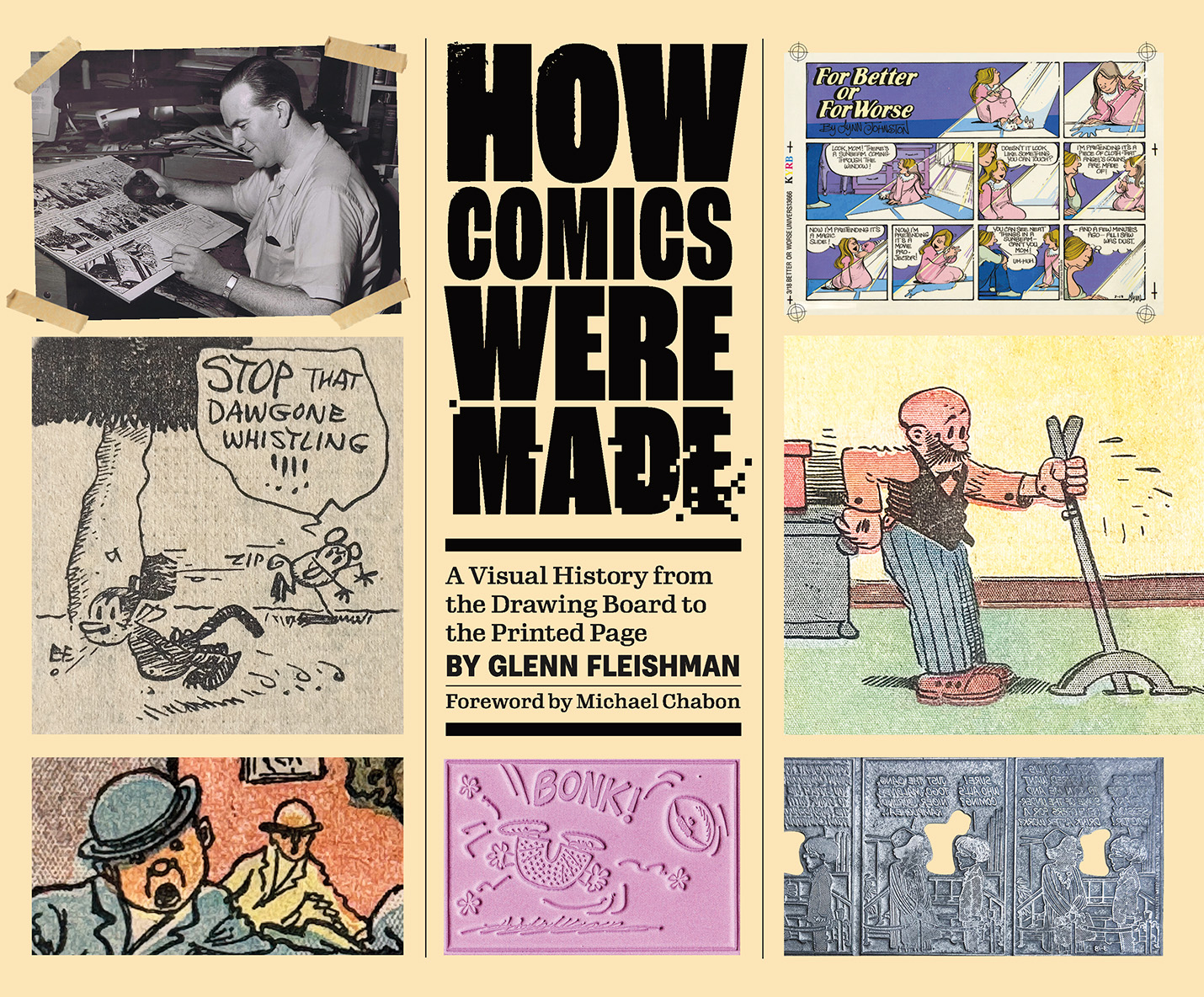
In the latest issue of Print Quarterly, I review Glenn Fleishman’s instructive, detail-oriented How Comics Were Made — A Visual History from the Drawing Board to the Printed Page. The book is a very helpful examination of the complicated, sometimes arcane, production and printing processes behind newspaper strips in particular, from the late nineteenth century till today. Here’s an excerpt:
Chromolithography, Electrotype, chalk plates, flongs, Zip-a-Tone, X-Acto knives, Ben Day dots, stat cameras, Rubylith, rubber cement, Wacom. The terms emanating from mass media printing in the modern era, notably in the realm of comic strips, are recondite yet evocative. They might baffle even print connoisseurs, and while comics afficionados are generally vaguely familiar with them, the arcane, highly specialized processes of which they are part, and which have brought comics to life on the page for upward of two centuries, remain exotic abstracts to most.
In steps Fleishman with this comprehensive study of the printing techniques of North American newspaper comics from the dawn of mass media to the digital present. Not an academic study, the book brings the enthusiastic zeal and keen attention to detail which, in the still institutionally unconsolidated domain of comics and cartoon studies, largely remains the preserve of fans.
In other words, this book is a balm for anyone curious about this and as such highly recommended.
Catch the review in Print Quaterly, available in better research libraries the world over!
